Most owners who call us about smoke have already formed a theory. Some are sure the chimney just needs brushing. Others have read that the whole flue must be relined. Both can be right, and both can be wrong, and the gap between the two answers is a lot of money. This post compares the four fixes we reach for most often when a Ventura fireplace smokes, so you can see why we recommend one over another for your house.
Option one: a sweep
A sweep removes what has built up inside the flue: soot, flaky tar, fallen mortar, leaves, and the odd nest. When the passage is narrowed, the fire cannot push its smoke up fast enough, and the overflow rolls out under the lintel.
Signs a sweep is the answer:
- The fireplace used to draw well and got worse over a season or two
- The flue has not been brushed in several years of regular fires
- You hear birds in spring, or find twigs and droppings on the smoke shelf
- The smoke smells sharper and more bitter than it used to
A sweep starts from $395. It is the cheapest fix on this list and the one we try to rule in or out first, because it costs little and settles the question quickly.
Option two: a damper repair
The damper is the metal door just above the fire. When it rusts, warps or loses a handle linkage, it may only open part way, and a half-open damper behaves like a half-blocked flue. Salt air near the beach is hard on these plates, and we see many in Ventura that have not swung fully in years.
Signs the damper is the fault:
- The handle is stiff, loose, or turns without the plate moving
- You can see daylight only through a narrow slot when it is "open"
- Smoke rolls out right from the start, even with a hot fire
Damper work ranges from freeing and adjusting the existing plate to fitting a new unit at the top of the flue. We price it on paper once we have seen which you need.
Option three: a cap or a taller stack
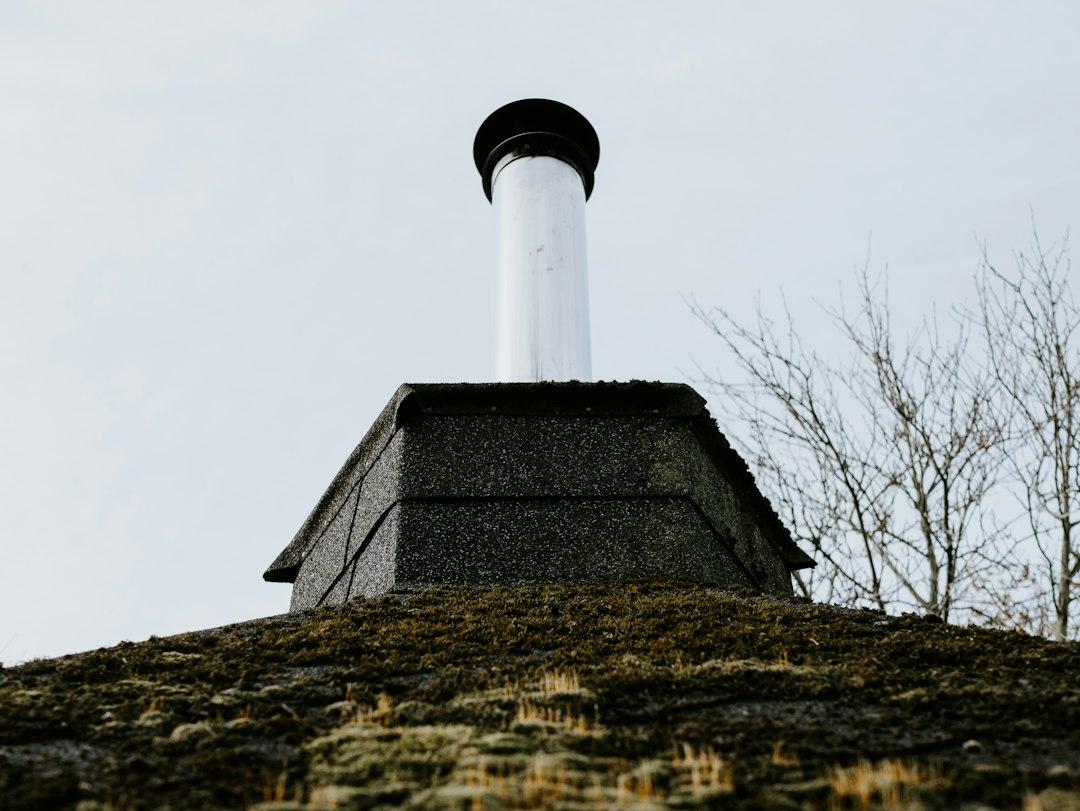
Wind can push smoke back down the flue. This happens most when the top of the chimney sits in the lee of a taller roof, a tree, or the slope of a hillside lot, and it gets worse when offshore wind arrives in the fall. A fitted cap breaks up the downdraft and keeps rain and animals out. Where the stack is simply too low for what surrounds it, extending it may be the real cure.
Signs wind is the cause:
- Smoke only spills on breezy nights, or from one wind direction
- Ash blows out of the firebox onto the hearth when no fire is lit
- A neighbor's two storey addition went up after the trouble began
A fitted cap is quoted after we measure. Its size, the number of flues it covers and the metal set the price. Extending a stack is masonry work, priced in writing after we measure.
Option four: relining or a sealed insert
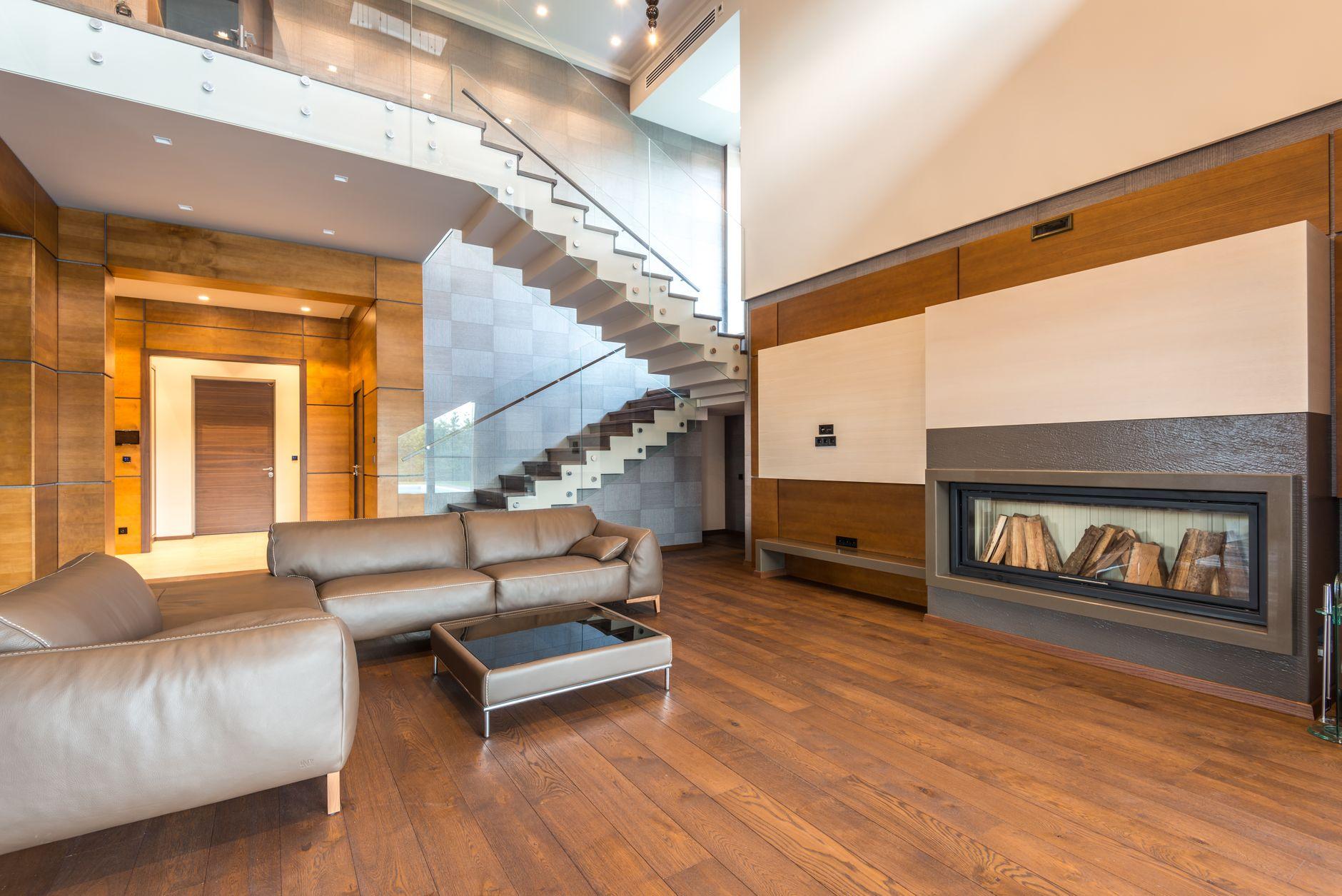
When the flue is too small for the opening, or its tiles are cracked and leaking, brushing will not help. A new liner sized to the opening can restore the draft and seal the passage. Some owners go a step further and close the opening altogether with a sealed gas insert, which brings its own vent and draws no smoke into the room at all.
Signs this is where you are headed:
- The fireplace has smoked since the day you moved in
- The opening is very wide or tall for the house
- A camera inspection found gaps or cracks between flue tiles
A sealed gas insert built into the existing opening runs $2,650 to $5,250. Liner jobs are measured first and priced on paper. Before either, a Level 2 with a camera ($370) tells us what condition the flue is in, so you are not paying to line a chimney that has a bigger problem.
How we decide between them
We start with the cheapest question and work up. Is the passage choked? Does the damper open? Is the top exposed to wind? Is the flue sized and sound? Each answer either fixes the problem or rules out a step. A Level 1 visit at $52 settles the first three on most houses. The fourth needs the camera.
The answers that decide your price are the ones you can give us: when the smoke started, when it shows up, and what changed around the house. Send those through the form on this page and we will suggest the visit that matches, with its cost, when we call back.
Why not do everything at once?
Some companies quote a sweep, a cap, a damper and a liner together. Occasionally that is right, but more often it means nobody found the actual fault. We would rather fix one thing, light a fire with you, and see whether it pulls. If it does not, the next step is already measured and on paper.
A note on gas fireplaces
Gas units do not smoke the way wood does, but they can roll exhaust into the room, leave black film on the glass or the wall above, and set off a carbon monoxide alarm. The causes overlap: a blocked vent, a vented log set burning against a shut damper, logs placed so they choke the flame. See our gas fireplace repair page if that is your situation.
Further reading
- Fireplace repair covers firebox, damper and smoke chamber work.
- Chimney cap installation explains sizing and metal choices.
- Chimney liner installation covers when relining fits.
- Our post on relining a flue that will not draw goes deeper on the last option.
Still not sure which of the four you are facing? Reach us through the contact page and we will start with the cheapest question first.
Smoke Where It Should Not Be?
Ansel Chimney Works starts from how you describe the trouble, tests the damper, flue and draft, and puts any fix on a written price. Visits run out of Ventura to Oxnard, Port Hueneme, Westlake Village and nearby towns.