"We lit a fire and the living room filled up." That is how most of our calls about smoke begin, and the second sentence is nearly always about money. Fair enough. A fireplace that pushes smoke into the room can be sorted out for the price of a sweep, or it can need a new damper, a taller stack or a liner. This post lays out the causes we meet most in Ventura homes, the ones that carry a published price, and the ones we put a number on once we have stood in front of the fireplace.
Why smoke takes the wrong way out
A fireplace works because hot gas is lighter than the cool air around the house. The warm column inside the flue rises and pulls room air in across the fire to replace it. Anything that weakens that pull, or narrows the way out, sends smoke along the easier route: through the opening and into the room.
On the coast the weak pull often has a plain cause. Marine air is cool and damp, a flue that has stood unused since spring is full of it, and the first fire has to shove that cold plug up and out before it can draw. Other causes take more work. The flue may be too small for a wide opening. The stack may sit lower than a second storey added next to it. The damper may open only halfway. A house fitted with tight new windows may starve the fire of air. Or soot, leaves and nesting material may have choked the passage.
The usual causes and what each one costs
Here is how the common causes line up against our prices. Where a job has a published figure we show it. Where it does not, the visit gives us the measurements to write one down for you.
| What we find | What we do about it | Price |
|---|---|---|
| Soot, tar or debris narrowing the passage | Brush and vacuum the whole run and the smoke chamber | from $395 |
| Cause not yet known | Level 1 look at the opening, damper and lower flue | $52 |
| Cracked tiles, or a flue nobody has seen inside | Level 2 with a video run top to bottom | $370 |
| Wind, birds or leaves coming down the top | Fitted cap sized to the flue | quoted after we measure the flue |
| Open fireplace that never drew well | Sealed gas unit built into the old opening | $2,650 to $5,250 |
| Damper stuck, opening too big, stack too short | Written figure once measured | after the visit |
The bottom row holds most of the uncertainty. A damper plate bent by heat may be a modest repair. An opening that is too large for its flue can sometimes be helped with a metal smoke guard across the top of the opening, and sometimes it calls for relining. A chimney that no longer clears a newer roofline nearby may need extending. We do not guess at those over the phone, because the right answer depends on numbers we take in person.
How the visit finds the cause
We begin where you begin: with what you have noticed. Does smoke spill only when the fire is first lit, or all evening? Does it get worse when the kitchen hood or the dryer is running? Does it happen on windy nights, or only when the wind comes from one side? Those answers often point at the cause before a tool comes out of the van.
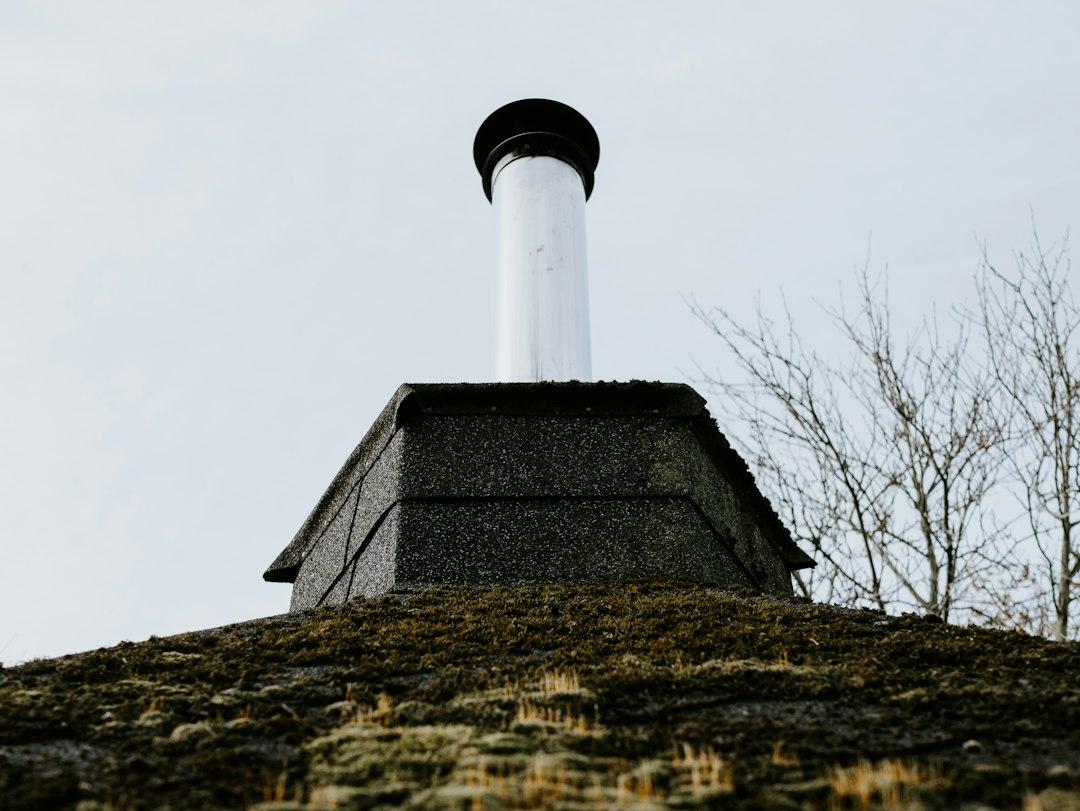
Then we look. We open and close the damper to see that it clears the throat, measure the fireplace opening against the inside of the flue, light up the lower flue and the smoke chamber, and go up to the top: how high the stack stands, what sits near it, whether a cap is there and whether it is clogged. If the flue needs to be seen end to end, that is the Level 2 with the camera. If brushing is all it needs, we say so and the bill stays at the sweep.
Sometimes we light a small test fire with a window cracked, then closed, to see whether the room itself is short of air. A house that has had new doors and windows fitted can go from drawing well to smoking with no change to the chimney at all.
Getting a figure for your own fireplace
Three things set the bill: what is causing the smoke, how much of the chimney the fix touches, and whether the fix is a stocked part or a job we build on site. For a number on your fireplace, use the request form at the top of this page and tell us when the smoke shows up and what you burn. We call back, ask a few questions in plain terms, and set a visit.
When smoke is also a safety question
Smoke in the room is unpleasant. Carbon monoxide is worse, and you cannot see or smell it. A fireplace that spills smoke can spill carbon monoxide too, most of all as a fire dies down late at night and the draft fades. If you have been living with a smoky fireplace, test the carbon monoxide alarms near the bedrooms and stop burning until the cause is known. On a gas fireplace, black film on the glass or a tall, ragged orange flame is a reason to call before the next use.
Patterns we see around Ventura
Homes close to the beach show more rust on caps and dampers, because salt air works on steel all year. Houses on the hillside streets above downtown catch gusts a flat lot never sees, and a Santa Ana evening can push down a short flue that draws well the rest of the year. Older houses near the center of town often have shallow fireboxes with wide openings, built before flue sizing got much thought. We also work in Oxnard, Port Hueneme and Westlake Village, and the same patterns turn up there with their own local twists.
Where to read more
If the firebox or damper itself is damaged, see our fireplace repair page. If the flue has not been brushed in years, start with a chimney sweep. For a gas unit that smells or blackens its glass, the gas fireplace repair page covers what we test. And if you are weighing a sweep against a bigger repair, our post on sweep or repair for a smoky room walks through that choice.
Ready to stop guessing about the smoke? Our contact page reaches the Ventura office, and the first conversation is about what you have seen, not a sales pitch.
Smoke Where It Should Not Be?
Ansel Chimney Works starts from how you describe the trouble, tests the damper, flue and draft, and puts any fix on a written price. Visits run out of Ventura to Oxnard, Port Hueneme, Westlake Village and nearby towns.